
November arrives with the hint of Christmas in the air. In Australia the evenings are still light, and in the United Kingdom the days are drawing in. Wherever you are, the run-up to Advent can feel busy before it has properly begun. There are gifts to plan, church events to attend, and lists to make.
Crochet does not have to be another item on that list. A regular stitching session can be the opposite: a quiet anchor in the day, a chance to sit with yarn in your hands and nothing to prove. This is not about finishing a gift by Christmas or working through a pattern at speed. It is about making space.
Many people find crochet relaxing, and the repetitive motion of stitch after stitch can feel like a quiet prayer in itself. Whether you crochet before breakfast, after the children are in bed, or during a break between errands, a simple routine helps you return to it without deciding every time. You do not need a special occasion to begin.
Start with a short, regular time
Ten or fifteen minutes is enough for an average maker to settle into a stitch. Choose a moment that already exists in your day rather than carving out a new one. After dinner, before you switch on the television, or first thing with a cup of tea. Keep the expectation small: you are showing up, not racing to a finished object.
It helps to attach the habit to something you already do. When the dishes are put away, or when the kettle has boiled, pick up the hook. If you miss a day, pick it up again the next. A routine is a rhythm, not a rule, and quiet time survives a missed evening better than a strict schedule does.
Choose a project that does not demand your full attention
Quiet time works best with a project you can put down and pick up without re-reading the pattern every time. A prayer square, a simple bookmark, or a small motif in a single colour are ideal. Avoid colour changes, shaping, or complicated stitch counts for this part of your day.
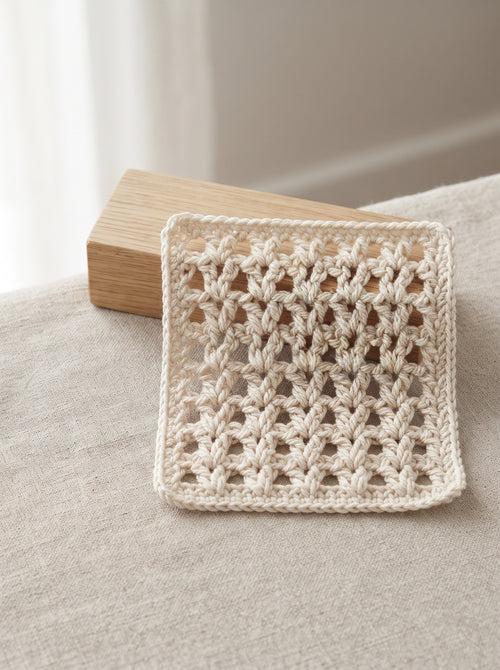
Prayer squares are small, usually around ten centimetres across, worked in a plain stitch such as double crochet (US single crochet) or half treble crochet (US half double crochet). They can be kept in a pocket, given to someone going through a hard time, or laid on a church prayer table. There is no set size or rule, which makes them perfect for quiet making.
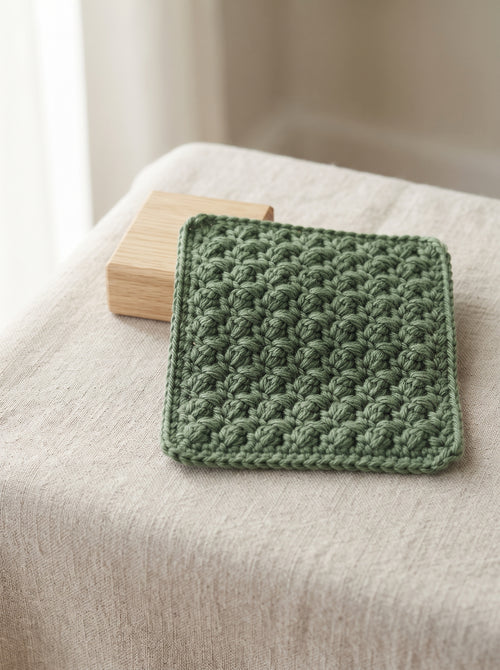
If you would like something with a little more texture, a linen stitch is easy to memorise once you have worked a few rows, and it lies flat without curling. The stitch creates a woven look with a two-row repeat that becomes automatic after a little practice. Small squares can also be joined later into a blanket if you decide to keep going, but that is a choice for another day.
Set up a crochet corner that stays ready
Friction kills quiet time. If you have to hunt for your hook and wind a ball of yarn every evening, you will not sit down. A small basket or zip case keeps your hook, scissors, stitch markers and current project together so you can pick it up and start.
The starter set in a zip case is useful here because the hooks and practice yarn stay in one place, ready for the next session. It includes soft-grip hooks for everyday projects, fine steel hooks for lace, small balls of yarn and the small tools you will reach for on most makes. A hook with a soft grip can also help if your hands feel tired after a day of typing or housework.
Good light matters too. A chair near a window, or a lamp that does not throw shadows across your work, makes the stitches easier to see. Keep a spare ball of yarn in the basket so you never have to stop because you ran out.

Crochet pattern
Little Jesus Crochet Pattern PDF, Sacred Heart Religious Amigurumi with Halo & Stand
Free pattern
Get the free pattern
Crochet kit
Double-layer crochet hook case, zip organiser for hooks and tools
From $47.53 AUD
See it in the shopStitches that suit quiet making
Look for stitches with a simple, repeating rhythm. Double crochet (US single crochet) worked in rows is one of the most straightforward. Half treble crochet (US half double crochet) builds a little faster while still being easy to read. Both are easy to memorise, so your hands can keep moving while your thoughts settle.
If you are new to reading stitch instructions, it helps to have a clear pattern nearby so you are not guessing. You can browse free crochet patterns for small projects, and if an abbreviation ever stops you, there is a guide to reading a pattern line on the blog.
Prayer squares, bookmarks and small gifts
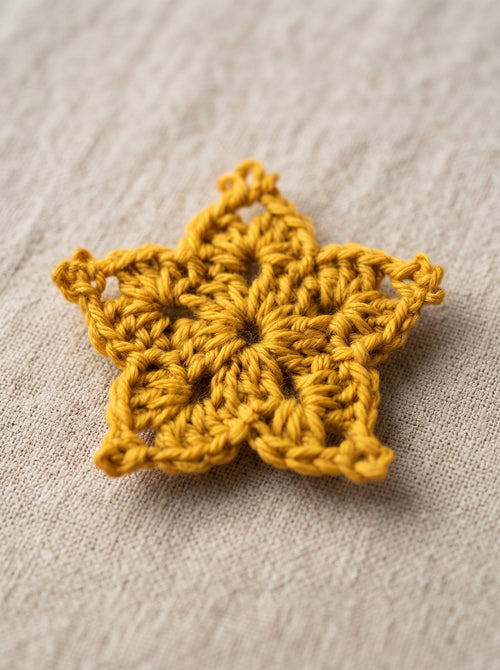
Small crocheted items fit naturally into Christian life. A prayer square can be handed to someone after a service, tucked into a baptism gift, or taken to a church fair. A crochet bookmark marks a place in a Bible or devotional book. A small star can sit on a Christmas tree or an Advent wreath, and a simple fish shape can be an ichthys symbol.
These makes also suit Sunday school gifts, first communion presents and confirmation keepsakes. Because they are small, they do not need to be perfect. A slightly uneven edge does not matter when the point is the time you spent making it. A stack of prayer squares in a drawer is a quiet resource for the year ahead.
Keep it going through Advent and Christmas
Advent begins on the fourth Sunday before Christmas Day, which in 2026 is 29 November. That leaves a few weeks in November to establish a quiet rhythm before December fills up. You might crochet for a few minutes each Sunday evening, or while listening to a carol service online.
There is no requirement to make anything for Christmas. If a gift emerges from your quiet time, that is a bonus. If all you produce is a stack of prayer squares and a calmer evening, that is enough.
Troubleshooting and tips for quiet crochet
- Yarn tangles: keep your project bag closed when you are not stitching, and pull yarn from the outside of the ball rather than the middle.
- Losing your place: lock a stitch marker onto the last stitch you worked so you can resume without counting from the beginning.
- Stiff hands: put the hook down and gently shake out your hands every ten minutes. A larger hook or softer yarn can also be easier on the joints.
- Mind wanders: that is normal. Notice where your thoughts went, then return your attention to the next stitch.
- Pattern confusion: keep a note of the hook size and yarn weight you used, and write down any changes you make so you can repeat them later.
A quiet crochet habit is not about production. It is about showing up with yarn and hook, and letting the stitches fall where they will. As Advent approaches, you might find that those few minutes become the part of the day you look forward to most.
"Be still, and know that I am God." — Psalm 46:10 (World English Bible)
There is no right way to do this. Whether you make one square or a dozen, whether you crochet every evening or once a week, the time is yours.
0 comments